Saturday, July 20, 2013

Buddhas, Blossoms, and Bomb Shelters

I'm hoping the internet gods will be smiling down on me now because I really want to make a photo-heavy post here. We just spent most of the day out of the city in an area of the municipality of Chongqing called Dazu. It is an area of lush, verdant mountains, and for once it wasn't hot and soupy. We first went to the Dazu Rock Carvings, which is an area where Buddhists carved their stories into the rocks on the sides of the hills. I have to admit, I stopped listening to the tour guide because we had to wear these ear pieces to listen to her, and I was having audio-filtering problems. Also, I am not very good at remembering numbers, but I think they were made around 1200 A.D. Basically, they're old and intricate and interesting to contemplate.

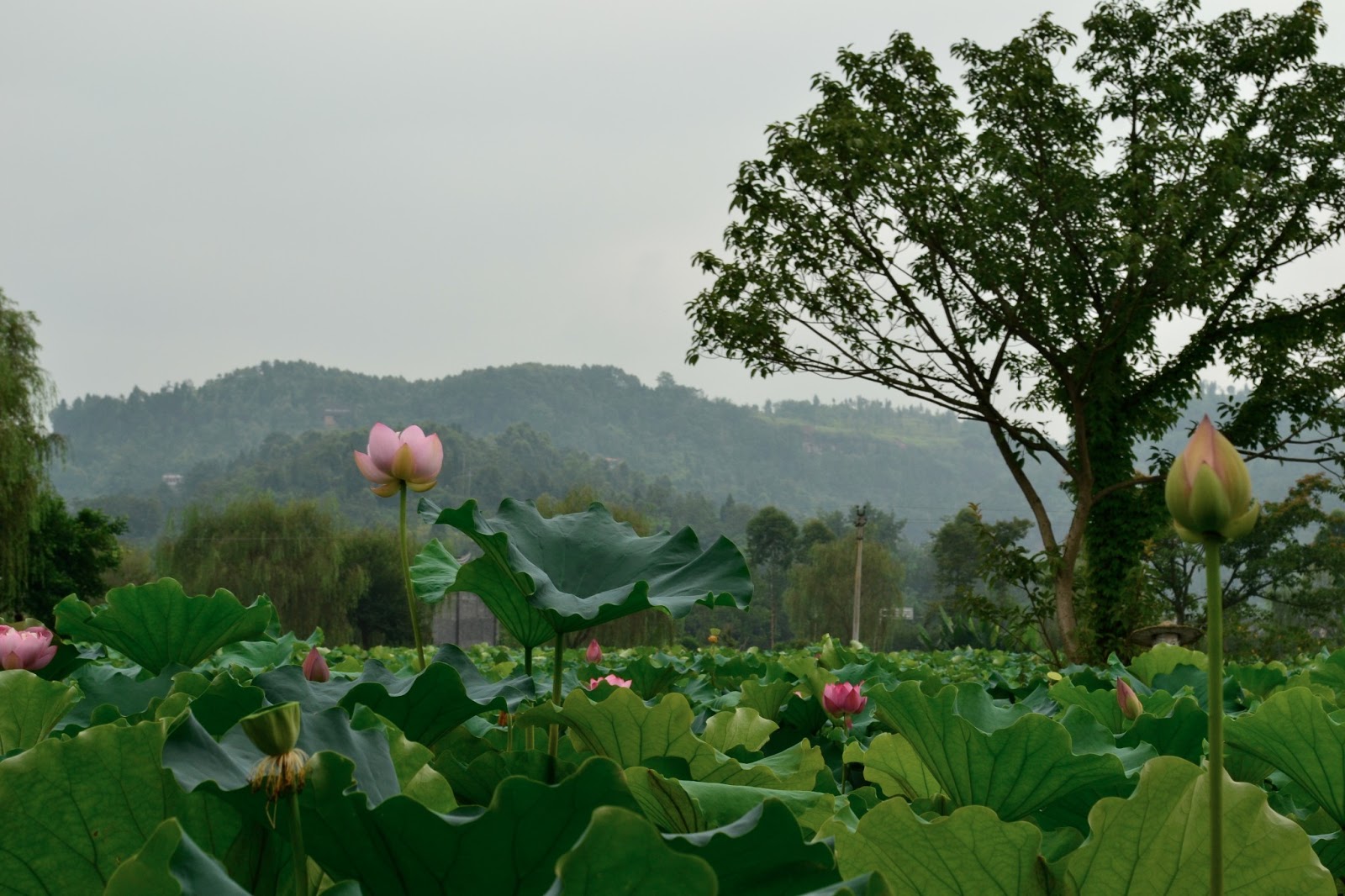
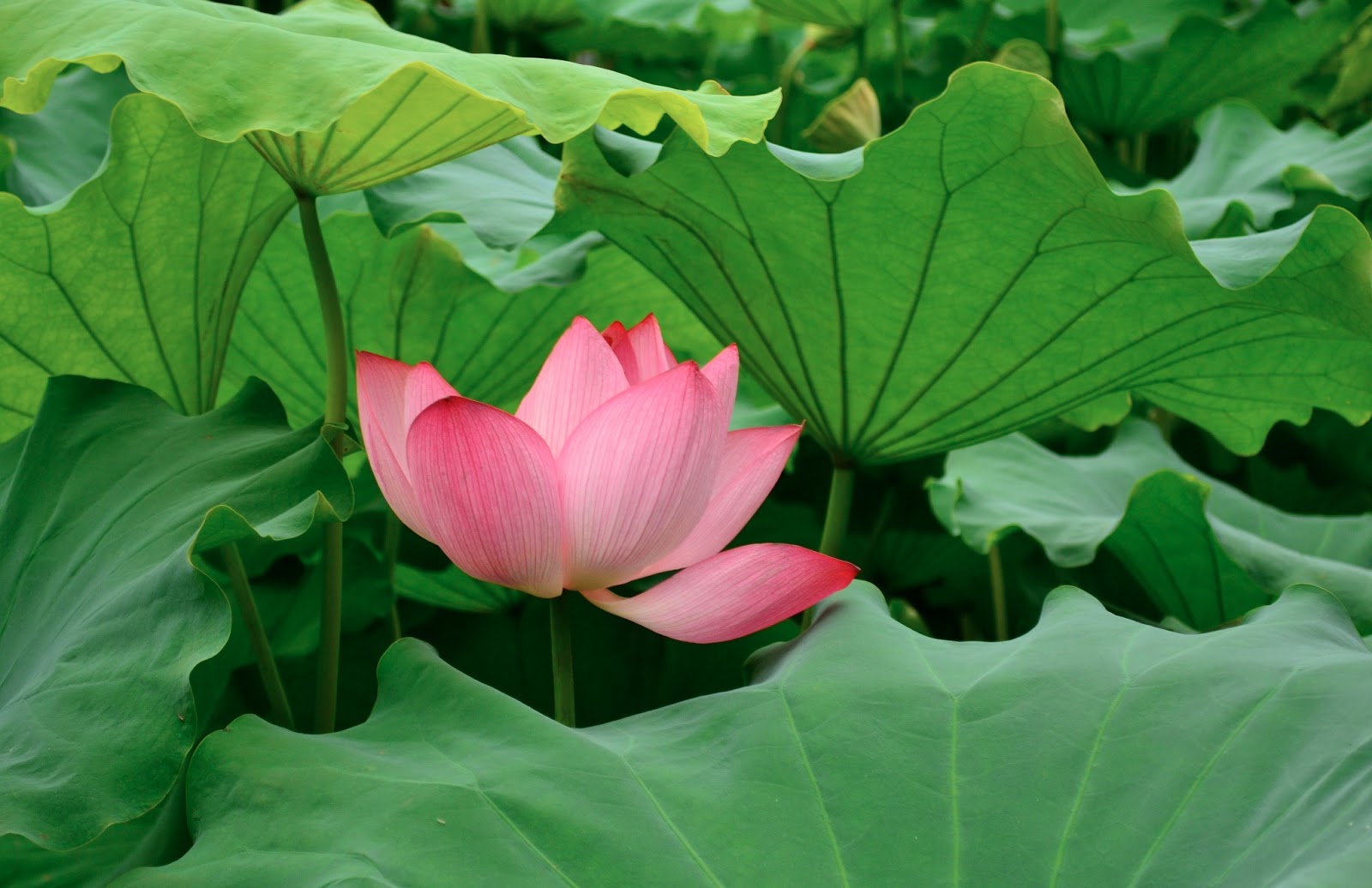
After that, we drove over to a lotus farm. I had never considered that there would be such a thing as a lotus farm, but there you have it. It actually seemed more like a garden-restaurant. Regardless, I think it was the most beautiful place I've been in China. There's the Great Wall, but that is more awesome, in the literal sense of the word, than beautiful. So for now, the lotus farm is the most beautiful. It was refreshing to be out of the city, and for a lot of different reasons, I just needed to have some relaxing time in a beautiful and peaceful space.

Tonight we're going to eat a hot pot dinner in a tunnel that served as a bomb shelter during WW2. Careful readers of this blog will remember that I wrote about how the Japanese hit Chongqing hard during the war because it served as the wartime capital of China. Now many of the bomb shelters in the city have been repurposed into shops and restaurants. I happened to take a photo of the place where we will eat yesterday, so I'll post it here.

Tomorrow we leave for Shanghai. I can't wait! I think Shanghai and Hong Kong are going to be the best cities of the trip.

Yay! OK, time for the photos:

Reclining Buddha and the panorama bulge


Dazu rock carvings 
More rock carvings

Finally some GREEN after all the cement-colored cities!

Moss covered path at the Dazu rock carvings

The character on the right means "west," and the one on the far left means, "one," but I don't know the center one.

A Buddha foot

Lots of Buddhas here

Loved the GREEN!
Lotus farm panorama. All the rest of the photos are also from the lotus farm except the last. I don't think they need captions


And this is the hot pot bomb shelter where we're eating dinner!

Thursday, July 18, 2013

Colorful Chongqing

On Wednesday we drove out of the city and up into the foothills to Jielong Middle School. School is out for the summer, but the school runs a summer program, so there were some students theres. When we arrived, students were preparing for a music and dance performance for us on their outdoor stage.

We were treated to a number of performances. There were these flute/recorder-type instruments that now are made of plastic, but used to be made of a gourd and bamboo. Next, students played an instrument that seemed to be a hybrid of an oboe and a trumpet. It was not a beautiful-sounding instrument. My parents should be glad it was not an option when I chose the clarinet in middle school band. The third performance was girls with bamboo and sticks. Both pieces had ribbon attached to them, and they played a rhythmic beat as they danced. It was great! Finally, we watched the girls do what they called Tai Chi Boxing. As soon as the kids finished, they transformed from serious performers to giggling, excited teenagers. (They all said they were 13, but look at how young they appear in the photos!) They were eager to teach us tai chi and their instruments. We all were taking pictures of each other, with each other, for each other. It was so much fun, and I think everyone had a great time.


We had another chance to interact with some older students after a short tour of the school. This time we broke up into small groups. We were loosely supposed to be teaching a mini English lesson to the kids in our groups, but I just ended up talking with a couple of girls and showing them photos on my phone. The girls' English was very basic (but a lot better than my Chinese!) so one of the teachers helped to translate. I guess it wasn't much of a lesson, but I think it was meaningful to all of us.

We had lunch in the little town, and I think we found the elderly folks hanging around the restaurant just as exotic as they found us. I can't say that I'm getting used to being stared at, but here in China it feels more like a curious stare than the leering stare I've felt in other places I've traveled. My blue eyes and freckles have, however, made more than one child cry out and run to their parents in terror when I've smiled and, "ni hao-ed" at them. Oh well...

In the evening, we took a short walk to the city squared where there were more people out dancing and hanging around. Here are a couple of photos:


I just realized that I didn't post any of the people dancing, but trust me, it's a battle of the boombox out there with different groups gathered around the square, each moving to their own songs. It's very lively and friendly.

Today was: lecture, eat a 28-course meal, lecture, lecture, eat a surprisingly bad vegetarian meal, and then go on an evening river cruise on the Yangtze River, get back to the hotel just in time to miss a gigantic thunderstorm. I'm having some trouble with the photos right now, so the cruise ones will have to wait. But here's one of ping pong tables at the university we visited today.

Tuesday, July 16, 2013

Out of the Furnace and into the Hair Dryer

"I feel like I just walked into a hair dryer!" complained fellow Fulbrighter, Elaine as a few of us left the weak but acceptable air conditioning of The Trade Union Hotel to venture out onto the streets of Chongqing on our first night in the city to see what we could find. What we found, after exploring the park: ladies doing aerobics, kids at rollerblade practice, men either A. sitting around with their shirts off and smoking, or B. playing basketball, was the lobby of the Hilton Hotel where we luxuriated in American style couches, air conditioning, wine, and prices. (English teacher note: I'm aware that the previous sentence probably had numerous grammatical errors. It was for effect, OK?) We had landed in 102 degree heat around mid-afternoon, and a few hours later, things hadn't changed much. Thankfully today was relatively cooler, and our Chongqing guides kept the outside activities to a minimum.

Chongqing, also known as the "mountain city," is situated within Sichuan Province, but it is its own municipality that reports directly to the Central Government. It's comparable to Washington, D.C. It is noticeably hillier here. Our manual transmission bus has had some interesting stops and starts on the hills, and yesterday we attacked a huge staircase in our neighborhood.

According to our scholar-escort, Nevan, it's the largest city in the world, but don't try to check that fact on Wikipedia because you won't find it. I'm really not sure on all the details, but what I understand is that the city proper is only (only!) around 7 or 8 million, while the rest of the municipality, which is approximately the size of not Rhode Island, but Maine, holds another 24 or 25 million to make a grand total of 32 million people and counting, thus, the largest "city" in the world. Personally, I don't think it counts if you're trying to tell me the city is the size of Maine. Flying in here I saw a lot of green open space.

Anyway, Chongqing is also a city of over 4,000 bridges. Remember the theme: China does nothing on a small scale. It is located at the confluence of the Yangtze and a smaller tributary. There is a point that juts out into the river that looks much like lower Manhattan, except that there is no end to the high rises here. You might think there are a lot of tall buildings in NYC, but they are nothing compared to the skyscrapers in Chinese cities. China wins at having lots of skyscrapers.


Let's see, Chongqing is also called the "fog city," because it's foggy here much of the year. Today I learned that this was helpful during WWII when Chongqing became a wartime capital for China and Japan was bombing the heck out of it.

When it's not the "fog city," it is also one of China's "Three Furnaces," because, as our trip pamphlet says, it "is unbearably hot in the summer." (See the beginning of the blog for proof.)

Things here feel a bit calmer than Beijing and definitely more real than Xi'an. There is the modern: elevated trains and high rises, but there is also some of the old: people carrying baskets of fruit suspended from either end of a pole across their backs. So far, so good.

We will spend one of our evenings here out on a river cruise, so I hope to have some interesting photos from that night. For now, here's the morning and evening view from my hotel room:

Monday, July 15, 2013

Experiencing the "Rural" Life

On Sunday we headed out for our homestay in the country. Our itinerary said “Experience the Rural Life,” I'd been a bit nervous about it. My vision was of me sleeping on a mat on the floor of some teeny house in 90 degree heat with no bathroom and no ability to communicate with my host family.

As it turns out, we're staying in this little rural Chinese B&B compound. The peasants (and that's the word they use in Chinese, and it's not pejorative) were forced off (paid-to-move-but-they-had-no-choice) their land and then they had to buy their home here. They no longer farm, but instead run these little bed and breakfasts for tourists looking to get out of the city. Suddenly our rural homestay turned into hanging out with my roommate in someone's living room that has wifi--with air conditioning!. It's not exactly “experiencing the rural life.”

When we arrived at the...I'll keep using compound for lack of a better word, we first met an artist who was taught by a famous painter who was not allowed to continue painting during the Cultural Revolution. Instead of painting, he taught others to paint...sounds like the ultimate way to get back at an oppressive government, right? Anyway, the art was beautiful, and I bought some!

Then at lunch, we got to make dumplings. It was fun, but all we really did was stuff them; we didn't make the dough for the wraps or the filling, but it was still good fun.
Working on my pinching and scalloping.


After lunch our Xi'an guide, Tiger, asked us if we wanted to go on a “little hike up mountain.” Sure! We enthusiastically agreed. So, we set off from the compound and walked up the street to this place that was a kind of river recreation area where people were eating at picnic tables and playing in the river. There were also incredibly smelly toilet areas as well as horses walking around. As we got to the end of the road and the mountain vegetation started, we saw this:
"Endless" staircase

Our trail was an endless, steep staircase. Just a “little hike up mountain.” So, up we went, hanging onto the chain link railing lest one of us fell and took out the entire 2013 Fulbright delegation. After Stairmastering for about 10 minutes, we reached the end of the stairs (OK, they weren't that endless) and got to a little outcropping. The view was beautiful, but the scene was really damped by four main factors:
  1. The hazy, surreal view from of the mountains was actually disgusting pollution, not romantic and mysterious fog.
  2. The weather was about 85 degrees and a million percent humidity. We were sweating uncontrollably, which normally is no big deal for me, but on this overnight trip we all packed really lightly and didn't have many options for changing into fresh clothes before we were getting on a plane to Chongqing tomorrow.
  3. There was trash on the ground everywhere.
  4. It smelled like poop. Probably because someone pooped nearby.

Some of us walked on a little farther, but since we didn't really know where the trail went, we soon turned around and managed to descend without incident.

Sweating profusely and the air smells like poop

Our last adventure of the day was after dinner. Tiger was taking us to the hot springs. I couldn't wait! I imagined a little hike into the woods, bamboo swinging in the breeze (not that that's a thing here in the stagnant, humid air) and sitting among the rocks looking at the stars (which also don't exist here in the pollution). Well, we got into the bus to go to the hot springs, and after just a few minutes of driving, we pulled up to a nice hotel and walked into the lobby. Turns out this is a Chinese hot spring:

While it didn't match my expectations, at least it didn't smell like poop.

Tomorrow we are off to Chongqing: the largest city you've never heard of.
 

Sunday, July 14, 2013

Terracotta Warriors

Well, it's been a full weekend here in Xi'an, although I'd say that this part of the trip has felt more like a vacation than did Beijing. We've only had two lectures since arriving, and we leave for Chongqing tomorrow.

On Saturday we visited the Terracotta Warriors Museum. It is really interesting because it's part museum, part archeological dig. The back story is that the first Emperor of China, Qin Shihuangdi had this "army" made as a part of his tomb. He started work on it very shortly after he took power, and it's good thing, because his reign was only about 14 years long! Anyway, the making of the terracotta soldiers and horses actually represents great progress because prior to this, kings were buried with their living slaves and soldiers...who quickly became their dead slaves and soldiers. Chalk another one up for living in the 20th and 21st Centuries.

After Emperor Qin died and was buried in his tomb, the empire fell apart, and grave robbers came down into the tombs to destroy them. Unfortunately for them, and fortunately for us, the torches they brought down into the tombs set the tar and wood roofs on fire, and the structure collapsed in on itself. In 1974, farmers were digging a well and discovered part of a terracotta soldier. Soon archeologists realized that there were thousands of these figures buried in the area.

Today there are 3 pits they are displaying and still digging in. They know that there is much more out there, but they are trying to figure out how they can preserve the figures better after they dig them out before they go in for more. Also, apparently Emperor Qin was buried in "rivers of mercury" or some similar Chinese outlandishness, and so the mountain where he's buried is poisonous and they're not sure how to get at it.

Oh, and did I mention it's the largest tomb complex in the world? Of course, right, because like I've said, China does nothing on a small scale.

Pit #1 at the museum

I make a pretty fierce warrior, right?

Close up of a cross-bow soldier
-->

Some Photos from Xi'an

Instead of writing a post right now, I'm just going to post some photos. This isn't because the internet doesn't work, or because I don't have time. It's because I want to go to Starbucks. (China is not the place to go for great coffee.)
The Lama Temple in Xi'an

One of the Buddhas at the Lama Temple

At the Lama Temple

Individual hot pots for lunch!

The gang at the Terracotta Warriors Museum

Glazes at the Terracotta factory

Replica Terracotta horses at the Shanxi Province History Museum

Xi'an drum tower